Chardham Yatra 2026: Complete Guide — Registration, Route, Dates & Tips
1. What is Chardham Yatra?
Every year, millions of devotees leave behind the noise of daily life and embark on one of the most sacred pilgrimages in the world — the Chardham Yatra. Nestled high in the Garhwal Himalayas of Uttarakhand, the four holy shrines of Yamunotri, Gangotri, Kedarnath, and Badrinath collectively form the Chardham — the four abodes of God.
The Chardham Yatra is not just a religious journey. It is a test of devotion, a once-in-a-lifetime experience of nature’s raw majesty, and for many, a deeply transformative spiritual awakening. Whether you are a first-time pilgrim, a seasoned traveller, or someone seeking divine blessings for your family — this yatra has something profound to offer.
The Origin — Adi Shankaracharya’s Vision
The Chardham Yatra was established by the great philosopher-saint Adi Shankaracharya in the 8th century CE. He revived and consecrated these four shrines to unify the Hindu faith across India. Visiting all four dhams — in the prescribed order of Yamunotri, Gangotri, Kedarnath, and Badrinath — is believed to wash away the sins of a lifetime and grant moksha (liberation from the cycle of birth and death).
Why Is Chardham Yatra So Popular in 2026?
In 2024, over 55 lakh pilgrims completed the Chardham Yatra — a new record. In 2026, with better infrastructure, smoother registration, and expanded helicopter services, more pilgrims than ever are expected to make this journey. The temples open in late April and close around Diwali and Dev Diwali — giving pilgrims a window of roughly six months.
 Ask Price
2. The 4 Dhams — Detailed Overview
Here is everything you need to know about each of the four sacred shrines — their deity, altitude, trek distance, opening dates in 2026, and what makes each one unique.
| Dham | Deity | Opens 2026 | Closes 2026 |
| Yamunotri | Goddess Yamuna | 19 April 2026 | ~Diwali (Mid Nov) |
| Gangotri | Goddess Ganga | 19 April 2026 | ~Diwali (Mid Nov) |
| Kedarnath | Lord Shiva | 22 April 2026 | ~Diwali (Mid Nov) |
| Badrinath | Lord Vishnu | 23 April 2026 | ~Dev Diwali (Nov End) |
Yamunotri — The First Dham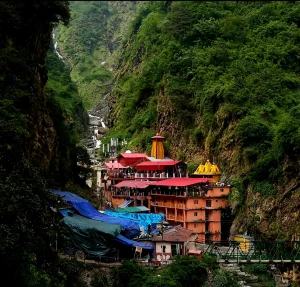
- Deity: Goddess Yamuna (source of the River Yamuna)
- Altitude: 3,293 metres above sea level
- District: Uttarkashi, Uttarakhand
- Trek: 6 km from Janki Chatti (one way)
- Opens: 19 April 2026 | Closes: Diwali (Mid November)
Yamunotri is the westernmost dham and the traditional starting point of the Chardham circuit. The trek from Janki Chatti passes through dense forests and mountain streams. The highlight here is the Surya Kund — a scalding hot spring where pilgrims cook rice and potatoes wrapped in cloth, as an offering to the goddess. The Divya Shila rock pillar, which pilgrims worship before entering the temple, is another unmissable sight.
Gangotri — The Second Dham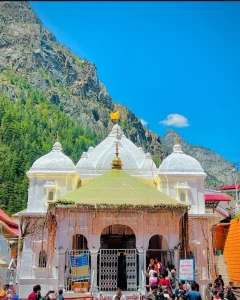
- Deity: Goddess Ganga (source of the River Ganga)
- Altitude: 3,100 metres above sea level
- District: Uttarkashi, Uttarakhand
- Road accessible — no major trek required
- Opens: 19 April 2026 | Closes: Diwali (Mid November)
Gangotri is where the River Ganga is believed to have descended from heaven to earth. The temple, dedicated to Goddess Ganga, sits on the banks of the roaring Bhagirathi river. From here, adventure seekers can trek a further 19 km to Gaumukh — the actual glacial source of the Ganga. The town of Uttarkashi, roughly 100 km away, serves as the main base for both Yamunotri and Gangotri.
Kedarnath — The Third Dham (and the Most Challenging)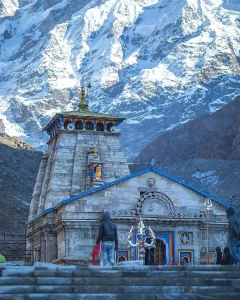
- Deity: Lord Shiva (one of the 12 Jyotirlingas)
- Altitude: 3,583 metres — the highest of the four dhams
- District: Rudraprayag, Uttarakhand
- Trek: 18 km from Gaurikund (or 30-minute helicopter ride)
- Opens: 22 April 2026 | Closes: Diwali (Mid November)
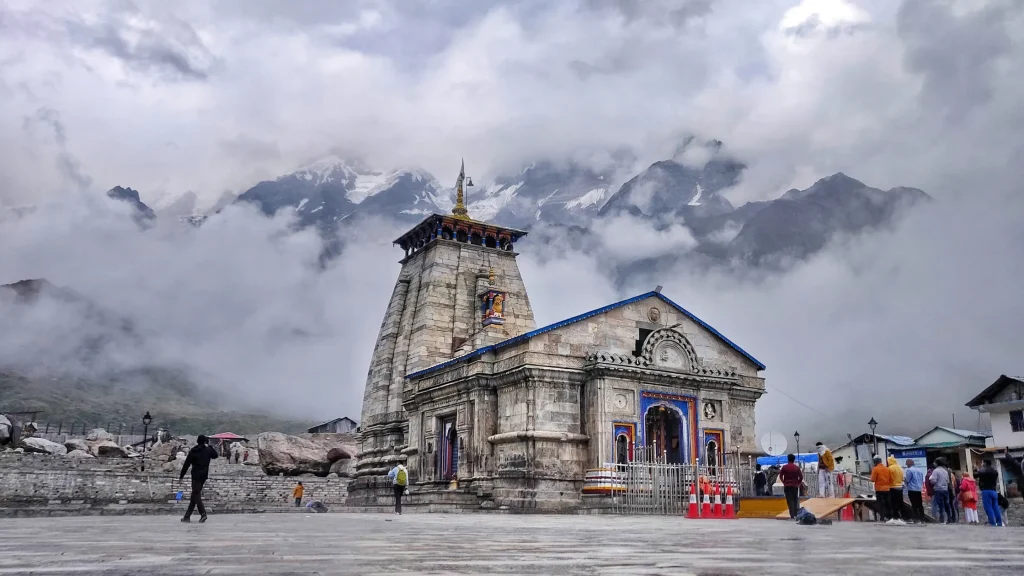
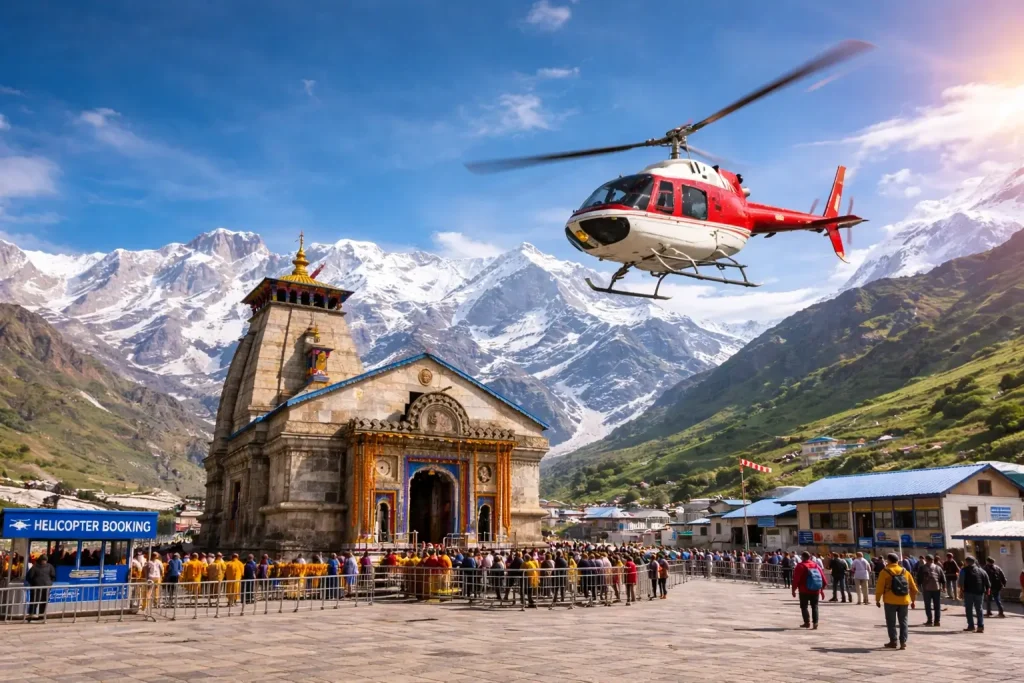
Kedarnath is undoubtedly the most revered and most visited of the four dhams. The ancient stone temple, believed to be over 1,200 years old, stands dramatically against the backdrop of snow-capped Himalayan peaks. The 18 km trek from Gaurikund is challenging but deeply rewarding. For elderly pilgrims or those with health concerns, helicopter services from Phata, Guptkashi, and Sitapur make Kedarnath accessible to all.
Important: Your registration QR code (Yatra Parchi) is checked at the Sonprayag/Gaurikund barrier. Do not proceed without it.
See the detailed about Kedarnath taxi service from Haridwar.
Badrinath — The Fourth Dham (The Final Abode)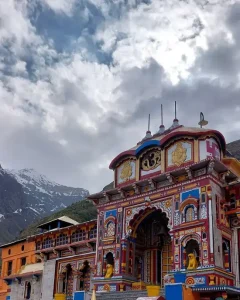
- Deity: Lord Vishnu (Badrinarayan)
- Altitude: 3,133 metres above sea level
- District: Chamoli, Uttarakhand
- Road accessible — no trek required
- Opens: 23 April 2026 | Closes: Dev Diwali (November End)
Badrinath is the final and grandest destination of the Chardham circuit. The colourful temple, set against the Neelkanth peak, houses a 1-metre-tall self-manifested (Swayambhu) idol of Lord Vishnu. Completing the circuit here is said to grant moksha. Nearby, the Tapt Kund — a natural hot sulphur spring — is used by pilgrims for a ritual bath before darshan. Do not miss Mana village, just 3 km from the temple — the last Indian village before the Tibetan border.
3. Best Time to Visit Chardham Yatra
The Chardham temples are open for approximately six months each year, from late April to November. However, not all months are equally good for a visit. Here is a season-by-season breakdown:
May to June — Peak Season (Most Popular)
This is when the majority of pilgrims visit. The weather is pleasant (10°C to 20°C at most dhams), roads are clear, and all four temples are easily accessible. Expect large crowds at Kedarnath and Badrinath in particular. Book your taxi, hotel, and registration well in advance — slots and accommodation fill up fast during May and June.
July to August — Monsoon Season (Caution Advised)
The Himalayas receive heavy rainfall during this period, making roads vulnerable to landslides. The journey is possible but unpredictable. We generally advise pilgrims to avoid this period unless they are flexible with travel dates. If you do plan to visit, keep a close eye on the Uttarakhand State Disaster Management Authority (SDMA) alerts and be prepared for delays.
September to October — Best Kept Secret
September and October are arguably the best months for Chardham Yatra — yet far fewer pilgrims visit. The rains have cleared, the skies are crystal blue, the mountains are freshly washed, and the crowds have thinned significantly. Temperatures are cooler (0°C to 12°C), so pack warm clothes. Kedarnath in September, with its snow-dusted peaks reflecting the autumn light, is a sight you will never forget.
Quick Best-Time Summary
- Best overall: May to June (pleasant weather, all facilities open)
- Best for peace and scenery: September to mid-October
- Avoid: Late June to August (heavy monsoon, landslide risk)
- Last chance: First 2 weeks of November (closing ceremonies are a unique experience)
4. Chardham Yatra Registration 2026 — Step-by-Step Guide
Since 2022, the Uttarakhand government has made Chardham Yatra registration mandatory for all pilgrims. This helps manage pilgrim flow, ensure safety, and reduce overcrowding at high-altitude shrines. Here is everything you need to know about registering for 2026.
Registration opened: 6 March 2026 (online). Offline registration also available at designated centres in Haridwar, Rishikesh, and Dehradun.
How to Register Online — Step-by-Step
- Visit the official portal:
Go to registrationandtouristcare.uk.gov.in — the official Uttarakhand Chardham Yatra registration website. Avoid third-party sites that charge extra fees for registration.
- Create an account
Click on ‘New Registration’ and enter your name, mobile number, and email address. You will receive an OTP to verify your number.
- Fill in pilgrim details
Enter details for all pilgrims travelling together: full name, age, gender, ID proof number (Aadhaar or passport), and health declaration. Note: A medical fitness certificate is required for pilgrims above 50 years of age.
- Choose your travel dates
Select your preferred visit dates for each dham. Each dham has a daily pilgrim cap — if your preferred date is full, choose an alternate date. Kedarnath fills up fastest, so book this dham’s slot first.
- Download your Yatra Parchi (QR Code)
After completing registration, download and print (or save) your Yatra Parchi — the QR code document. Each pilgrim gets a unique QR code. This is checked at Sonprayag for Kedarnath, Janki Chatti for Yamunotri, and at entry points for other dhams.
Offline Registration Centres in 2026
- Haridwar: Har Ki Pauri Tourist Information Centre
- Rishikesh: Triveni Ghat Tourist Office
- Dehradun: GMVN Tourist Bungalow, Astley Hall
- Srinagar (Garhwal): District Tourist Office
Important Registration Rules
- Registration is free of cost on the official portal
- Each pilgrim must have their own QR code — group QR codes are not valid
- Medical certificate mandatory for pilgrims aged 50 and above
- Daily pilgrim cap at Kedarnath: approximately 12,000–15,000 pilgrims per day
- Keep your ID proof with you at all times — it will be checked along with your QR code
5. Route Map & 10-Day Chardham Yatra Itinerary
The classic Chardham Yatra route starts from Haridwar or Dehradun and covers all four dhams in the traditional order: Yamunotri → Gangotri → Kedarnath → Badrinath. The complete journey, done comfortably, takes 10 to 12 days by road. Below is a popular 10-day itinerary starting from Dehradun.
Chardham Yatra Route Overview
Barkot (Yamunotri base) → Yamunotri → Uttarkashi → Gangotri → Guptkashi → Gaurikund → Kedarnath → Rudraprayag → Joshimath → Badrinath → Mana → Rishikesh – haridwar – Dehradun
10-Day Day-wise Itinerary
| Day | Route | Key Highlights | Overnight Stay |
| Day 1 | Dehradun → Barkot | Drive via Mussoorie, Kempty Falls, Nainbag. Scenic Yamuna valley views. | Barkot |
| Day 2 | Barkot → Yamunotri → Barkot | Trek 6 km to Yamunotri. Darshan, Surya Kund, cook rice in hot spring. | Barkot |
| Day 3 | Barkot → Uttarkashi | Drive along Yamuna river valley. Visit Vishwanath Temple in Uttarkashi. | Uttarkashi |
| Day 4 | Uttarkashi → Gangotri → Uttarkashi | Morning darshan at Gangotri. Bhagirathi Shila, Suryakund. Drive back. | Uttarkashi |
| Day 5 | Uttarkashi → Guptkashi | Long scenic drive via Tehri. Evening aarti at local temple. | Guptkashi / Sitapur |
| Day 6 | Guptkashi → Gaurikund → Kedarnath (trek) | Drive to Gaurikund. Begin 18 km trek (or helicopter). Reach Kedarnath by evening. | Kedarnath |
| Day 7 | Kedarnath darshan → Gaurikund → Rudraprayag | Early morning puja at Kedarnath. Trek back down. Drive to Rudraprayag. | Rudraprayag |
| Day 8 | Rudraprayag → Joshimath / Pipalkoti | Drive via Karnaprayag, Nandprayag. Views of Panch Prayag. | Joshimath / Pipalkoti |
| Day 9 | Joshimath → Badrinath → Mana Village | Badrinath darshan. Tapt Kund, Brahma Kapal. Visit last Indian village — Mana. | Badrinath / Joshimath |
| Day 10 | Badrinath → Rishikesh / Haridwar | Drive back via Chamoli, Srinagar (Garhwal), Devprayag. Reach Dehradun by evening. | Home |
Chardham Yatra by Helicopter — The Quick Route
For pilgrims who want to visit all four dhams but have limited time or physical constraints, helicopter packages are available. Most helicopter yatras cover all four dhams in 5 days. Helipads are located at Kharsali (Yamunotri), Harsil (Gangotri), Phata/Guptkashi/Sitapur (Kedarnath), and Badrinath.
- Kedarnath helicopter (one way): ₹3,500–₹5,500 per person
- All-inclusive 5-day Chardham helicopter package: ₹1,20,000–₹1,80,000 per person
- Booking: Pawan Hans, Heritage Aviation, and UCADA are the main operators
Note: Book tickets from official website only >> https://heliyatra.irctc.co.in/
6. How to Reach the Chardham — Transport Guide
By Road (Recommended)
The most popular and scenic way to do Chardham Yatra is by road. All four dhams are connected by well-maintained mountain roads (largely improved under the Char Dham Mahamarg Vikas Pariyojana). Most pilgrims hire a dedicated taxi or book a package that includes a driver for the full 10–12 day journey.
Starting from Dehradun- Haridwar – Rishikesh : Haridwar is one of the best starting points for Chardham Yatra. It is just 5 hours from Rudraprayag, base point for Kedarnath and Badrinath, and well-connected to all dham routes. Negi Taxi Service, based right at Jolly Grant, offers the best Chardham Yatra taxi service with experienced hill drivers who know every curve of the route.
By Air
- Nearest airport: Jolly Grant Airport, Dehradun (closest to all four dhams)
- Flights available from Delhi, Mumbai, Bangalore, Hyderabad, Ahmedabad and other major cities
- From Jolly Grant, hire a taxi directly to your first dham base camp
Arriving at Jolly Grant? Negi Taxi Service Jolly Grant provides direct airport pickup and Chardham Yatra packages starting from Jolly Grant Airport. No need to arrange separate transport — we handle everything. Call: +91 98775-93477
By Train
- Nearest railway stations: Haridwar (well-connected), Rishikesh (limited trains), Dehradun
- From Haridwar/Rishikesh/Dehradun, hire a taxi to start the yatra
- Shatabdi, Jan Shatabdi, and Dehradun Express connect Delhi to Dehradun daily
By Bus
- GMOU (Garhwal Motor Owners Union) and Himgiri buses run from Haridwar and Rishikesh to the dham base camps
- Budget-friendly but slower, less comfortable, and less flexible than a private taxi
- Ideal for solo budget travellers — not recommended for elderly pilgrims or families with children
Why a Private Taxi Is the Best Option for Chardham
- Door-to-door service — no multiple transfers or missed connections
- Flexibility to stop at viewpoints, prayags, and temples along the route
- Experienced hill drivers who are familiar with mountain road safety
- Comfortable vehicles (Innova Crysta, Ertiga, Tempo Traveller) for long mountain drives
- Peace of mind for elderly pilgrims and families

Accommodation along the Chardham route ranges from very basic dharamshalas to comfortable hotels and GMVN guesthouses. Here is what to expect at each major stop:
Key Overnight Stops & Accommodation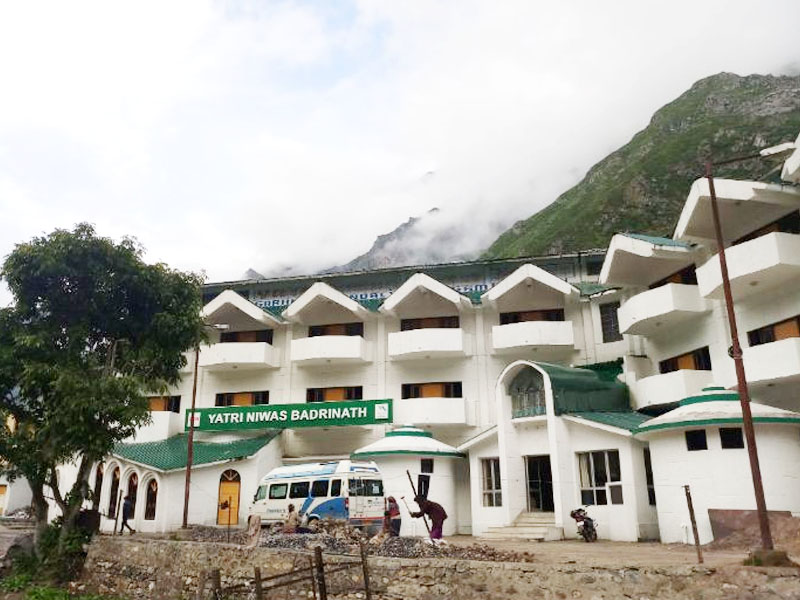
- Barkot (Yamunotri base): Several hotels and guesthouses. GMVN Tourist Rest House available.
- Uttarkashi: Best base for Gangotri. Good range of hotels (budget to mid-range). Book in advance during May–June.
- Guptkashi / Sitapur (Kedarnath base): Many lodges and dharamshalas. GMVN Guesthouse at Sitapur recommended.
- Kedarnath (at the top): Limited GMVN tented accommodation and dharamshalas. Very cold — bring warm clothes.
- Joshimath: Several comfortable hotels for the night before/after Badrinath.
- Badrinath: Hotels right near the temple. Book early as rooms fill by 10 AM in peak season.
Tips for Booking Accommodation
- Book at least 3–4 weeks in advance for May and June visits
- GMVN (Garhwal Mandal Vikas Nigam) guesthouses are reliable and government-run — book at https://gmvnonline.com
- Dharamshalas (run by religious trusts) are free or very cheap but may be basic
- Your taxi driver will often know good local stays — experienced drivers like us can recommend trusted options
8. Packing List & Health Tips
Essential Packing List
- Warm clothes: Thermals, fleece jacket, windproof jacket, woollen cap, gloves
- Comfortable trekking shoes or sturdy sports shoes with grip
- Raincoat or poncho (especially May–June and monsoon season)
- Personal medicines and a basic first-aid kit
- Sunscreen (SPF 50+), sunglasses, and lip balm — UV levels are very high at altitude
- Water bottle and ORS sachets
- Valid government ID and printed Yatra Parchi (QR code)
- Small backpack for the trek to Yamunotri and Kedarnath
- Torch/headlamp with extra batteries (power cuts are common)
- Cash (ATMs are scarce beyond Uttarkashi and Ukhimath)
Medicines to Carry
- Diamox (acetazolamide) — for altitude sickness prevention (consult your doctor before use)
- Paracetamol and Ibuprofen — for headache and body pain
- Antacids and digestive tablets — mountain food can upset stomachs
- Cough syrup and cold medicine — temperature swings can cause colds
- Bandages, antiseptic cream, and blister plasters — for the Kedarnath trek
Health Tips for a Safe Yatra
- Get a full medical check-up before the yatra — especially if you are above 50 years
- Stay hydrated — drink at least 3–4 litres of water per day at altitude
- Do not rush — walk slowly and take breaks. Altitude sickness worsens with exertion.
- Avoid alcohol and smoking — they worsen altitude sickness significantly
- If you feel breathless, dizzy, or have a severe headache, descend immediately and seek medical help
- Medical aid posts are available at Sonprayag and Kedarnath — do not hesitate to use them
Special Advice for Elderly Pilgrims
For pilgrims above 60 years or those with heart/lung conditions, the helicopter option for Kedarnath is strongly recommended. The 18 km trek at 3,500+ metres altitude can be extremely taxing. Ponies and dolis (palanquins) are also available at Gaurikund for the Kedarnath trek. Badrinath and Gangotri are road-accessible and perfectly manageable for elderly pilgrims.
9. Chardham Yatra Cost
One of the most searched questions about Chardham Yatra is — how much does it cost? The answer depends on your travel style, group size, and the time of year. Below is a realistic vehciles breakdown for 2026 (per day, based on a 10-day itinerary starting from Dehradun -Rishikesh or Haridwar).
| Vehicle | Capacity (₹) | Best For (₹) | 10 Days (₹) |
| Dzire Sedan | 4+1 seater | Solo / Couple | ₹4000 per day |
| Ertiga | 6+1 seater | Small family | ₹4500 per day |
| Innova Crysta | 6+1 and 7+1 seater | Family / Group | ₹5500 per day |
| Traveller | 17 Seater | Large group | ₹8500 per day |
Money-Saving Tips
- Travel in a group of 4–6 — taxi costs are shared, reducing per-person cost significantly
- Opt for GMVN guesthouses over private hotels — reliable, affordable, and well-located
- Avoid peak month (May) if budget is a concern — September rates are 20–30% lower
- Carry cash — card payments are unreliable beyond Uttarkashi and Rudraprayag
- Book your taxi early to lock in better rates (prices rise sharply in April)
10. Frequently Asked Questions (FAQs)
Is Chardham Yatra safe for elderly pilgrims?
Yes, Chardham Yatra is very much doable for elderly pilgrims with proper planning. Badrinath and Gangotri are road-accessible and require no trekking. For Kedarnath, helicopter services, ponies, and dolis are available. Yamunotri involves a 6 km trek, but palki services are available. Carry a medical certificate and consult your doctor before the trip.
Can we do Chardham Yatra in 7 days?
It is possible but quite rushed. A 7-day itinerary means spending just one night at each dham base, which leaves very little buffer for weather delays or road blockages. We recommend at least 10 days for a comfortable journey. If time is short, consider a 5-day helicopter Chardham package.
Is Chardham Yatra registration mandatory in 2026?
Yes. Registration is mandatory for all pilgrims visiting any of the four dhams. Your QR code (Yatra Parchi) is checked at designated checkpoints. Registration is free on the official Uttarakhand government portal: registrationandtouristcare.uk.gov.in
What is the best starting point for Chardham Yatra?
Haridwar, Rishikesh, and Dehradun are the three main starting points. Dehradun (Jolly Grant Airport) is increasingly popular as it offers direct taxi access to all four dham routes and has good flight connectivity from major cities.
When do the Chardham temples open in 2026?
Yamunotri and Gangotri open on 19 April 2026. Kedarnath opens on 22 April 2026, and Badrinath opens on 23 April 2026. The exact opening muhurat for Kedarnath and Badrinath is announced on Mahashivratri and follows the Vedic calendar.
How much does the Kedarnath helicopter cost in 2026?
A one-way helicopter ticket for Kedarnath (from Phata or Guptkashi) costs approximately ₹3,500–₹5,500 per person. Return tickets are ₹6,000–₹9,000. Prices vary by operator and season. Book online at irctc.co.in or via UCADA’s official portal.
Are there ATMs along the Chardham route?
ATMs are available in Uttarkashi, Guptkashi, and near Badrinath. Beyond these towns, card machines and ATMs are rare or unreliable. Always carry sufficient cash for the entire journey — at least ₹5,000–₹8,000 per person in hand.
What is the daily pilgrim limit at Kedarnath?
The daily pilgrim cap at Kedarnath is approximately 12,000–15,000 pilgrims. This is enforced through the online registration system. If you plan to visit during May or June, register as early as possible to secure your preferred dates.
Can non-Hindus visit the Chardham temples?
Non-Hindus are generally not permitted inside the main sanctum of Kedarnath and Badrinath temples. However, they are welcome to visit the surroundings, admire the scenery, and experience the spiritual atmosphere of the Himalayan region.
How do I book a Chardham Yatra taxi?
You can book a Chardham Yatra taxi directly with us by call or WhatsApp . We offer pickup from Dehradun Airport, Haridwar or Rishikesh and DELHI as well. Our drivers are experienced hill experts who have driven the Chardham route many times and will ensure your yatra is safe, comfortable, and memorable.
Ready to Begin Your Chardham Yatra? Let Us Drive You There.
The Chardham Yatra is one of the most extraordinary journeys a person can undertake. It is not just a pilgrimage — it is a conversation with the Himalayas, a renewal of faith, and an experience that stays with you for the rest of your life.
At Negi Taxi Service Jolly Grant, we have had the privilege of taking hundreds of pilgrims on this sacred journey. Our hill-expert drivers, clean and comfortable vehicles, and 24/7 support ensure that your yatra is free of stress — so you can focus entirely on your devotion.
“Book Your Chardham Yatra Taxi Today Call / WhatsApp: +91 98775-93477 Email: hello@taxiservicesdehradun.com Pickup: Dehradun, haridwar Rishikesh and Delhi | Available 24/7″
Jai Badri Vishal! Jai Kedar! May your Chardham Yatra be blessed and beautiful.